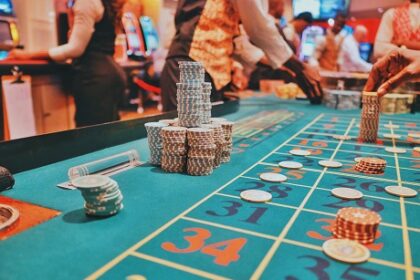



Casino games are based on chance because their outcomes depend largely on random events rather than human control. Whether a game involves spinning reels, rolling dice, or selecting cards, uncertainty remains an important part of the experience. Many people misunderstand this randomness and believe that patterns, experience, or special techniques can guarantee particular results.
The reality is that casino games use mathematical principles to create unpredictable outcomes. Probability, random number generators, and game rules determine how results are produced and distributed over time. Although certain games include decisions that influence probabilities, no strategy can eliminate uncertainty or guarantee consistent winnings.
Understanding why casino games are based on chance helps explain how gambling systems operate and why outcomes can vary significantly. It also helps readers recognize common misconceptions about luck, winning streaks, and supposedly predictable patterns. This guide explores the science of randomness, casino game mathematics, and the difference between chance and skill.
What Does Chance Mean in Casino Games?
Chance refers to the uncertainty surrounding an event’s outcome. In casino games, it describes results that cannot be reliably predicted before a particular round or event takes place. A roulette wheel, shuffled deck of cards, or electronic randomization system produces outcomes involving uncertainty. Players cannot determine the result simply by wanting a particular outcome.
Every game has rules that define its possible results. However, knowing these rules does not mean a person can predict exactly what will happen next. For example, rolling a standard fair die produces one of six possible numbers. Each number has an equal theoretical probability, but the next result remains uncertain.
This distinction between understanding probabilities and predicting outcomes is essential. Mathematics can describe how frequently certain events should occur across many trials. It cannot guarantee which result will appear in a specific independent event. Casino games depend on this uncertainty, making chance a defining feature of their design.
Why Randomness Is Essential to Casino Game Design
Randomness allows games to produce varied outcomes instead of repeating a fixed sequence. Without uncertainty, many casino games would become predictable mathematical exercises. Players could eventually identify future results if the underlying sequence were known. Randomization prevents ordinary observation from providing reliable knowledge of what will happen next.
Different games create randomness through different systems. Traditional physical games may use shuffled cards, spinning wheels, or rolling dice. Electronic games generally rely on software that produces randomized results according to programmed rules. Although the mechanisms differ, the purpose is to create outcomes that are not reliably predictable.
Randomness does not mean every possible result must have the same probability. Some games contain outcomes that are more likely than others because of their rules. For example, different card combinations have different probabilities of occurring. Understanding this difference helps explain how casino mathematics works without assuming that every outcome is equally likely.
How Probability Explains Casino Game Outcomes
Probability is the mathematical study of how likely an event is to occur. It expresses uncertainty using numbers between zero and one or percentages between zero and one hundred. A probability of zero represents an impossible event under the defined conditions. A probability of one represents an event that is certain to happen.
Consider a fair six-sided die with equally likely outcomes. The probability of rolling any particular number is one in six. However, this probability does not mean the chosen number must appear once every six rolls. Several consecutive rolls may produce other numbers without violating the mathematical rules.
Probability is most useful for describing patterns across repeated observations. Large collections of independent events may approach their expected statistical proportions over time. Individual events can still produce surprising results or unusual sequences. This difference between long-term expectations and short-term uncertainty is central to understanding casino games.
The Role of Random Number Generators in Online Casinos
Online casino games commonly use random number generators, often called RNGs, to determine results. These systems produce sequences of numbers that are used to select outcomes according to the game’s programmed rules. A digital slot machine may use such a system to determine reel positions. Electronic card and roulette games may also use randomized processes.
Most software-based gambling systems use pseudorandom number generators rather than physically random events. These algorithms create sequences designed to appear statistically random when properly implemented. Their quality depends on factors such as algorithm design, initialization, and system security. A poorly implemented system may not provide the same reliability as a properly tested one.
Independent testing organizations may evaluate gambling software for randomness and mathematical compliance. Such testing can help determine whether a game behaves according to its published design. However, certification does not mean that players will receive favorable outcomes. It means the relevant system has been assessed against specified technical requirements.
Why Slot Machine Results Cannot Be Reliably Predicted
Slot machines are familiar examples of casino games dominated by chance. Modern electronic slots generally use random number generators to select outcomes. The symbols displayed on the screen represent the result of an underlying randomized process. Their appearance does not reveal a dependable pattern for predicting future results.
A common misconception is that a slot machine becomes more likely to produce a favorable result after several unfavorable rounds. In properly functioning games where each round is independent, earlier results do not determine the next outcome. The machine does not need to compensate for previous results. This misunderstanding is closely related to the gambler’s fallacy.
Different slot games also have different mathematical structures. Their rules may specify varying probabilities, payout schedules, and return-to-player figures. These values describe characteristics of the game over many theoretical plays. They do not indicate when a particular result will occur or promise an individual player a specific return.
Why Roulette Depends Primarily on Chance
Roulette is another example of a casino game built around uncertain outcomes. A ball moves around a spinning wheel and eventually settles into one numbered pocket. The result depends on physical conditions and the wheel’s design. Although the process follows physical laws, ordinary players cannot reliably predict its final position.
The wheel contains a fixed set of numbered pockets, and the number of pockets affects mathematical probabilities. European roulette has thirty-seven pockets, including a single zero. American roulette commonly has thirty-eight pockets because it includes both zero and double zero. These differences affect the game’s underlying mathematics.
Roulette also illustrates why previous outcomes do not reliably reveal future results. Several consecutive appearances of one color do not mean the opposite color is guaranteed next. Assuming that random events must quickly balance themselves is a misunderstanding of probability. Independent outcomes can produce streaks without indicating a predictable future pattern.
How Dice Games Demonstrate Random Outcomes
Dice games use physical randomness created by throwing objects with numbered faces. The movement and final resting position of each die depend on numerous physical factors. Small differences in the initial conditions may change the final result. This uncertainty makes dice useful for demonstrating the principles of chance.
For a fair six-sided die, each face has an equal theoretical chance of appearing. However, combinations involving multiple dice can have different probabilities. For example, when rolling two fair dice, some totals can occur through more combinations than others. This difference demonstrates why understanding possible outcomes matters when studying probability.
Even when the mathematical probabilities are known, the result of an individual throw remains uncertain. Rolling the same total repeatedly does not establish a dependable pattern. Each properly randomized independent throw introduces a new uncertain event. Dice games therefore illustrate the difference between predictable mathematical distributions and unpredictable individual outcomes.
Are Card Games Based on Chance or Skill?
Card games are more complicated because some involve both randomness and human decisions. Shuffling introduces uncertainty by changing the order of cards before they are distributed. Players generally cannot know every card that will appear during a game. The resulting uncertainty is an important part of card-based casino experiences.
Certain card games also involve choices that may influence the probability of different outcomes. These decisions can affect how a game unfolds without eliminating its random elements. A person may understand the rules and mathematical principles while still experiencing unfavorable results. Skill and chance can therefore exist within the same game.
The balance between skill and randomness varies considerably across card games. Some rely heavily on predetermined rules, while others involve more complex decision-making. However, identifying a game as partly skill-based does not mean its results are guaranteed. Uncertainty remains an important factor whenever randomized cards influence the outcome.
What Is the House Edge in Casino Games?
The house edge is a mathematical concept describing the operator’s expected advantage within a casino game’s rules. It is generally expressed as a percentage of the amount wagered over repeated play. This value arises from the relationship between possible outcomes, their probabilities, and the game’s payout structure. It is not a prediction of any particular person’s result.
A game with a theoretical house edge does not necessarily produce the same financial outcome during every session. Short sequences can differ greatly from their long-term mathematical expectations. Some participants may experience favorable results, while others experience losses. The expected advantage becomes more meaningful when analyzing large numbers of repeated events.
Understanding the house edge is important because it explains the financial structure of many casino games. Randomness can create unpredictable individual results while the rules still provide an expected mathematical advantage to the operator. These two characteristics are not contradictory. A game can be random and still have an unfavorable long-term expected return for participants.
Understanding Return to Player in Casino Mathematics
Return to player, commonly abbreviated as RTP, is a theoretical percentage used to describe a game’s expected payout over extensive play. It is calculated from the probabilities and payouts specified by the game design. RTP is often discussed in relation to electronic casino games. However, it represents a mathematical expectation rather than a guaranteed personal outcome.
For example, a hypothetical game with a theoretical RTP of ninety-six percent has an expected return of ninety-six units for every hundred units wagered across extensive play. This does not mean every player receives ninety-six units back. Actual outcomes can vary dramatically across individual sessions. The remaining percentage represents the theoretical house advantage under the stated assumptions.
RTP figures can also be misunderstood when people interpret them as short-term predictions. A percentage does not reveal when a particular payout will occur. It cannot guarantee that previous losses will be recovered through continued participation. Understanding these limitations helps prevent unrealistic expectations about the relationship between theoretical returns and individual results.
Why Winning and Losing Streaks Happen Naturally
Random sequences often contain clusters of similar outcomes. These clusters can appear surprising because people sometimes expect randomness to produce constant alternation. In reality, independent events do not need to follow a visually balanced sequence. Several similar results can occur consecutively without indicating that the underlying system has changed.
For example, repeatedly tossing a fair coin may produce several heads in a row. This sequence is possible even though each individual toss has an equal probability of heads or tails. The previous results do not create a requirement for the next toss to produce tails. Similar principles apply to properly independent casino outcomes.
Streaks become misleading when people interpret them as evidence of special luck or predictable patterns. A run of favorable results does not establish that future outcomes will remain favorable. Likewise, an unfavorable sequence does not mean a favorable event is approaching. Recognizing these misconceptions is important for developing an accurate understanding of randomness.
What Is the Gambler’s Fallacy?
The gambler’s fallacy is the mistaken belief that previous independent random outcomes influence the likelihood of future outcomes. It often appears when someone assumes that a particular result is overdue. The belief comes from misunderstanding how probability behaves across repeated events. It can lead to inaccurate predictions about games based on chance.
Imagine a fair coin landing on heads several times consecutively. Someone might believe that tails must be more likely on the next toss. However, if each toss is independent, the probability remains unchanged. The coin has no memory of earlier results, and past outcomes do not create a balancing obligation.
This principle applies to many randomized casino activities. Previous roulette results or electronic game outcomes do not automatically determine what happens next. A streak may be unusual without revealing a hidden pattern. Understanding the gambler’s fallacy helps readers distinguish genuine mathematical relationships from assumptions based on recent observations.
Why Casino Strategies Cannot Guarantee Winning Results
Many claims about casino games suggest that special systems can remove uncertainty. These claims often rely on supposed patterns, previous results, or assumptions about how games should behave. However, random outcomes do not become predictable simply because someone follows a repeated method. No betting pattern can guarantee success in a genuinely chance-based game.
Changing the amount wagered also does not change the underlying probability of an independent event. A larger wager may increase the amount of money involved, but it does not make a roulette result or slot outcome more predictable. Repeated participation can increase financial exposure. It cannot force random events to produce a desired result.
Some games allow decisions that affect their mathematical expectations, but this differs from guaranteeing winnings. Even informed decisions remain subject to uncertainty when randomized events influence results. Claims promising certain profits or risk-free methods should therefore be treated skeptically. Understanding probability provides a more reliable explanation than promotional promises about beating chance.
Why Human Psychology Often Misunderstands Randomness
Human beings naturally look for patterns in their surroundings. This ability helps people understand many everyday situations, but it can also create mistakes when interpreting random events. A sequence of similar outcomes may appear meaningful even when it occurs naturally. Psychologists describe this tendency as pattern perception, which can sometimes produce false conclusions.
Another common issue is selective memory. People may remember surprising favorable outcomes more clearly than ordinary or unfavorable events. This can create an inaccurate impression of how frequently certain results occur. Personal experiences may feel convincing, but they do not replace mathematical evidence collected across many observations.
Confidence can also increase after someone successfully predicts a few outcomes by coincidence. However, a short sequence of correct guesses does not establish a reliable prediction method. Randomness naturally produces occasional apparent successes. Recognizing these psychological effects helps explain why misconceptions about chance remain common despite well-established probability principles.
How Casino Games Differ From Pure Skill-Based Games
A pure skill-based game depends primarily on the decisions and abilities of its participants. Knowledge, practice, and performance directly influence the outcome rather than relying on randomly generated events. In contrast, many casino games incorporate mechanisms designed to introduce uncertainty. The distinction helps explain why different activities produce different relationships between effort and results.
Some games combine skill and chance instead of belonging entirely to one category. Participants may make decisions, but randomized cards, dice, or other events still influence what happens. This creates situations where a knowledgeable participant may experience an unfavorable result. Skill does not automatically remove the uncertainty introduced by random events.
Understanding this difference prevents the mistaken assumption that every game rewards experience in the same way. A person can become more familiar with rules without gaining control over independent random outcomes. The mathematical structure remains important regardless of confidence or familiarity. Evaluating games accurately requires recognizing both their random elements and any genuine decision-based components.
Why Understanding Chance Matters for Responsible Awareness
Understanding chance helps people recognize that casino outcomes are uncertain and cannot be controlled through confidence or intuition. This knowledge challenges misleading claims about guaranteed results and supposedly reliable winning systems. It also explains why past outcomes cannot promise future success. Accurate information is especially important when evaluating gambling-related advertising and entertainment claims.
Casino games may be presented as recreational activities, but their financial risks deserve serious attention. Randomness means participants can experience losses even when they understand the rules. Repeated participation does not guarantee recovery of earlier losses. Recognizing these limitations is an important part of understanding the broader risks associated with gambling.
Education about probability also supports critical thinking beyond casino environments. Concepts such as independence, expected value, and statistical variation appear in science, economics, and everyday decision-making. Learning how random events work can improve the interpretation of uncertain information. The central lesson is that knowing the mathematics of chance does not provide control over individual outcomes.
Conclusion
Casino games are based on chance because random events influence their outcomes. Physical mechanisms such as dice, cards, and roulette wheels create uncertainty, while electronic games use randomization systems. Probability explains how likely different results are without identifying exactly what will happen next. This distinction is fundamental to understanding casino mathematics.
Concepts such as the house edge, return to player, and independent events explain why casino results vary. Winning and losing streaks can occur naturally without revealing dependable patterns. Common misconceptions, including the gambler’s fallacy, often arise when people expect random events to balance themselves immediately. Understanding these principles helps separate mathematical facts from misleading assumptions.
Ultimately, chance remains an essential feature of casino games regardless of their design or presentation. Some activities include skill-based decisions, but randomness can still determine important parts of the outcome. No system can guarantee favorable results in a genuinely unpredictable process. Learning about probability provides a clearer understanding of how casino games function and why their outcomes remain uncertain.
Frequently Asked Questions (FAQs)
Why are most casino games based on chance?
Casino games use random events such as shuffled cards, dice rolls, spinning wheels, or computerized randomization. These mechanisms create uncertainty, meaning individual outcomes cannot be reliably predicted even when their mathematical probabilities are known.
Are online casino games completely random?
Many online casino games use pseudorandom number generators to produce unpredictable results. Properly implemented and tested systems are designed to meet specified randomness standards, although individual results remain uncertain and are not guaranteed.
Can casino game results be predicted using patterns?
Patterns observed in previous independent outcomes do not reliably predict future results. Random sequences naturally contain streaks and clusters, but these do not establish that a particular outcome is due to appear.
What is the difference between luck and probability?
Luck is an informal description of how favorable or unfavorable an outcome feels. Probability is a mathematical measure of how likely an event is to occur. Neither guarantees a particular result.
Does the house always win in casino games?
Not in every individual event or session. However, many casino games have a mathematical house edge that favors the operator over extensive repeated play. Short-term results can vary significantly from long-term expectations.