


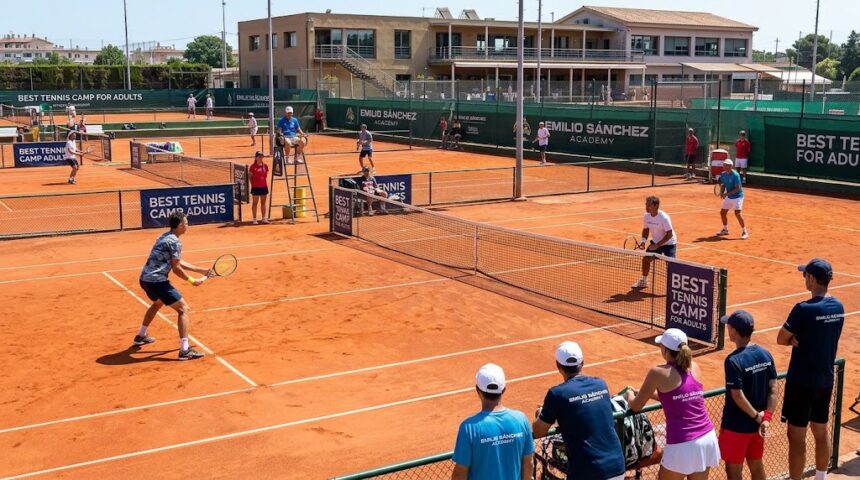
The Emilio Sánchez Academy is best for adults seeking rigorous, high-volume baseline drills and footwork conditioning on traditional clay courts. Stakhovsky tennis camps are best for players desiring boutique, small-group masterclasses focused on transition play, net tactics, and personalized tactical guidance from an ATP Tour veteran. Choose based on endurance and technical goals.
Key takeaways
- Emilio Sánchez Academy emphasizes rigorous Spanish clay-court footwork, physical endurance, and high-repetition baseline patterns.
- Sergiy Stakhovsky camps offer a boutique, masterclass environment centered on net rushing, slice variations, and tactical court positioning.
- Adults targeting high-volume stamina and grinding rallies should choose Emilio Sánchez Academy, while players wanting personalized attacking craft should pick Sergiy Stakhovsky.
Detailed evaluations compare the tactical Spanish coaching methodology pioneered at Sánchez-Casal Tennis Academy—now Emilio Sánchez Academy—against the aggressive net strategies taught by Sergiy Stakhovsky. A structured breakdown examines daily physical demands, coach-to-student ratios, and recommended NTRP skill brackets across both adult tennis camps, followed by practical booking advice and established alternative European tennis destinations.
Which is the best tennis camp for adults: Stakhovsky or Emilio Sánchez Academy?
The best tennis camp for adults depends on your conditioning goals and tactical preferences. The Emilio Sánchez Academy excels in structured, high-volume training rooted in traditional Spanish clay methodology, whereas clinics led by Sergiy Stakhovsky deliver an exclusive, low-ratio tactical environment tailored toward modern all-court attacking strategies and aggressive transitions.
Head-to-head comparison overview
Co-founded by Grand Slam doubles champions Emilio Sánchez Vicario and Sergio Casal, the institution formerly known as Sánchez-Casal Tennis Academy operates major training hubs in Barcelona, Spain, and Naples, Florida. By comparison, former ATP Tour professional Sergiy Stakhovsky hosts boutique clinic series across select European destinations, focusing heavily on net rushing and serve-and-volley precision.
| Comparison Criteria | Emilio Sánchez Academy | Sergiy Stakhovsky Camps |
|---|---|---|
| Location Options | Barcelona (Spain) and Naples (Florida, USA) | Select European resorts and seasonal pop-up clinics |
| Primary Court Surfaces | Red clay (Barcelona) and green clay / hard (Florida) | Predominantly hard courts and indoor synthetic carpets |
| Coach-to-Student Ratio | 1:4 group ratio | 1:2 to 1:4 boutique masterclass ratio |
| Daily Court Hours | 3 to 4 hours of tennis plus fitness daily | 2.5 to 3.5 hours of high-intensity tactical drills daily |
| Training Focus | Heavy topspin, baseline endurance, aggressive defense | All-court attacking, serve-plus-one patterns, net play |
| Target Skill Profile | NTRP 3.0 to 5.0+ (Recreational and competitive tracks) | NTRP 3.5 to 5.0+ (Intermediate to advanced competitors) |
Key differences for recreational vs competitive adults
For recreational players rated NTRP 3.0 to 3.5 who need adaptable scheduling, the Emilio Sánchez Academy provides comprehensive weekly adult packages featuring dedicated physical conditioning, video technical analysis, and flexible half-day or full-day options. The rigorous footwork drills build exceptional baseline consistency for endurance-focused athletes.
Competitive tournament players rated NTRP 4.0 to 5.0+ seeking rapid match-play refinement often favor the intimate setting of camps hosted by Sergiy Stakhovsky. Drawing directly from elite ATP Tour competition, Sergiy Stakhovsky emphasizes proactive offensive patterns, transitional net coverage, and pressure point management rather than baseline volume.
What is the training philosophy at Emilio Sánchez Academy vs Stakhovsky camps?
Emilio Sánchez Academy relies on the patented Spanish training system focusing on footwork drills, Spanish bucket feeding, and aggressive defensive baseline play, whereas Sergiy Stakhovsky camps emphasize proactive shot selection, transition movement, forward court positioning, and serve-and-volley nuances. Both programs systematically elevate adult NTRP ratings through contrasting tactical foundations.
The Emilio Sánchez Spanish drill system
Originally established as the Sánchez-Casal Tennis Academy by Emilio Sánchez Vicario and Sergio Casal, the training model centers on an aggressive defense philosophy recognized in global tennis academy evaluations. At Emilio Sánchez Academy, coaches run high-repetition Spanish bucket feeding sessions that emphasize rapid recovery steps, balance, and deep crosscourt patterns. Real-time tactical feedback and integrated video analysis help adult players maintain consistency and endurance across diverse NTRP levels.
Stakhovsky’s tour-level attacking masterclass
Drawing from years of elite competition on the ATP Tour, camps led by Sergiy Stakhovsky train participants in forward-court positioning, transition movement, and proactive shot patterns. Sergiy Stakhovsky provides technical instruction on backhand slice skidding, decisive net approaches, and aggressive serve placement. Daily video analysis reviews court movement and volley preparation to help intermediate and advanced NTRP players shorten points quickly.
Baseline defense vs. net transition: Choose Emilio Sánchez Academy if the training goal centers on baseline stamina, heavy rally consistency, and recovery mechanics pioneered by Emilio Sánchez Vicario and Sergio Casal at the Sánchez-Casal Tennis Academy. Select Sergiy Stakhovsky clinics if the objective is mastering slice control, net coverage, and forward pressure derived from the ATP Tour to win fast-paced NTRP matches.
What are the physical demands and limitations of each adult camp?
The Emilio Sánchez Academy carries high physical exhaustion risks due to multi-hour Spanish grinding drills under warm conditions, demanding robust cardiovascular stamina from adult participants. Conversely, camps organized by Sergiy Stakhovsky feature limited calendar dates, fewer worldwide host venues, and less permanent infrastructure than mega-academies, making travel timing and player recovery key scheduling trade-offs.
Injury prevention and recovery considerations
Adult players facing 4 to 6 daily hours of high-repetition basket feeding at the Emilio Sánchez Academy risk significant mechanical strain on knee, hip, and shoulder joints. Co-founded by Emilio Sánchez Vicario and Sergio Casal, the Sánchez-Casal Tennis Academy historically built its aggressive defensive system around relentless baseline footwork, requiring diligent stretching and hydration to avoid joint overuse. Recreational athletes across varied NTRP skill brackets must manage fatigue carefully, whereas clinics run by Sergiy Stakhovsky prioritize shorter, explosive burst drills reflecting dynamic ATP Tour attacking patterns.
Availability, group sizing, and scheduling constraints
Logistical considerations also separate both training pathways, as boutique masterclasses directed by Sergiy Stakhovsky occur on limited seasonal dates that require participants to book external off-site hotels. By contrast, the Emilio Sánchez Academy maintains open, year-round weekly enrollment supported by on-campus campus dorms and private resort accommodations. Dedicated adult competitors targeting specific NTRP development milestones should weigh whether an immersive commercial facility or a pop-up traveling clinic best accommodates their personal recovery schedule.
How to choose and book the right adult tennis camp for your skill level?
To choose the right adult tennis clinic, evaluate your physical fitness, select between European clay or hard courts, confirm coach-to-student ratios under four-to-one, and book early to secure optimal seasonal weather and lodging packages. Matching your baseline endurance and tactical objectives ensures productive court time and noticeable on-court improvements.
Step 1: Assess your current stamina and technical objectives
Begin by establishing an honest self-rating using either the Universal Tennis Rating or the NTRP scale, typically between NTRP 3.0 and 5.0 for advanced adult clinics. Clarify whether you want tactical defensive grinding taught at Emilio Sánchez Academy or attacking transition drills featured in boutique clinics led by former ATP Tour competitor Sergiy Stakhovsky. Inquire about customized private lesson add-ons before paying deposits so directors can reserve dedicated staff for individual technical adjustments.
Step 2: Compare facility amenities and court surfaces
Choose your training environment based on seasonal climate and court surface preferences. According to NubiaPage’s global tennis academy rankings, the Sánchez-Casal Tennis Academy operates premier red clay courts at its Barcelona campus alongside American hard courts at its Naples, Florida destination. European clay demands superior stamina and slide footwork, whereas boutique traveling clinics run by Sergiy Stakhovsky often select fast hard courts or seasonal resort facilities across Europe.
Step 3: Confirm group placement and verify enrollment dates
Verify that your host facility guarantees a maximum four-to-one student-to-coach ratio to avoid overcrowded courts and stagnant drills. Review strict cancellation policies, medical insurance provisions, and transfer terms before finalizing travel arrangements. Programs at Emilio Sánchez Academy group players strictly by dynamic movement and NTRP standard on arrival, ensuring every competitive adult receives an appropriate intensity level throughout their stay.
What are the best alternative tennis academies for adults?
Leading alternatives to an adult camp at the Emilio Sánchez Academy or a Sergiy Stakhovsky clinic span Europe and the United States. Top options include the Rafa Nadal Academy in Mallorca for world-class facilities, Mouratoglou Academy for cutting-edge biomechanical analysis, Saddlebrook Resort in Florida for luxury resort living, and Evert Tennis Academy for boutique tactical development.
- Rafa Nadal Academy (Manacor, Spain): Best for players seeking an adult intensive camp structure with high destination appeal and expansive hard and clay court availability. Weekly intensive programs offer structured morning drills, footwork conditioning, and afternoon match-play clinics tailored for recreational and competitive NTRP 3.0 to 5.0+ participants.
- Mouratoglou Tennis Academy (French Riviera): Ranked among the world’s premier training destinations in an international tennis academy evaluation, this site delivers high-tech adult clinic programs. Players receive specialized video diagnostics and biomechanical swing analysis modeled after professional ATP Tour preparation, accompanied by premium Mediterranean accommodations at higher tuition rates.
- Saddlebrook Resort (Wesley Chapel, Florida): Built on the legendary conditioning principles of Harry Hopman, Saddlebrook Tennis Academy integrates demanding on-court drills with upscale resort lodging, according to NubiaPage. Year-round adult camps provide daily fitness sessions, multi-surface court access, and turnkey package pricing suitable for domestic travelers.
When selecting an alternative, adult players should evaluate total travel cost, destination appeal, court availability, and current NTRP ratings against individual training goals. For effortless resort relaxation paired with high-volume drilling, Saddlebrook Resort is the recommended domestic option. For European clay-court rigor comparable to the Emilio Sánchez Academy—historically founded as the Sánchez-Casal Tennis Academy by Emilio Sánchez Vicario and Sergio Casal—the Rafa Nadal Academy offers the strongest overall package.
How We Evaluated Emilio Sánchez Academy and Sergiy Stakhovsky Adult Camps
To evaluate these training experiences for adult players, training options were assessed using four core benchmarks:
- Coach-to-student ratios and dedicated feedback during live-ball drills.
- Curriculum progression tailored to adult NTRP playing standards from 3.0 through 5.0+.
- Court surfaces, fitness amenities, and recovery facilities available at each venue.
- Tactical emphasis, balancing Spanish baseline consistency against modern aggressive transition play.
This comparison is grounded in published curriculum structures, adult player reviews, and industry benchmarks, including Nubiapage’s review of top tennis academies featuring the Emilio Sánchez Academy. No hands-on testing or physical participation was conducted at clinics organized by Sergiy Stakhovsky or at the Emilio Sánchez Academy.
Limitations of this assessment include regional facility discrepancies between satellite locations, periodic schedule adjustments, and unverified guest coach availability. Program pricing and exact court hours for both Sergiy Stakhovsky events and Emilio Sánchez Academy adult camps fluctuate based on season and group demand.
Frequently Asked Questions
Where is Rafael Nadal’s tennis camp located?
Rafael Nadal’s flagship tennis camp, the Rafa Nadal Academy, is located in his hometown of Manacor on the island of Mallorca, Spain. Highlighted in global tennis academy rankings, the main campus features red clay and hard courts alongside comprehensive sports medicine facilities. The organization also runs satellite programs abroad, but the primary adult tennis training clinics and intensive camp sessions operate year-round from the Mallorca headquarters.
What are the best tennis academies in the USA for adult players?
The best tennis academies in the USA for adult players include the Emilio Sánchez Academy in Naples, Florida, alongside destination programs like IMG Academy and Saddlebrook Tennis Resort. The Emilio Sánchez Academy, established by Emilio Sánchez Vicario and Sergio Casal, delivers targeted adult training focused on classic Spanish footwork and high-repetition tactical drills. These venues provide adult clinics structured specifically across diverse NTRP skill ratings rather than treating adults as an afterthought.
How much does an adult weekly tennis camp cost at Emilio Sánchez Academy?
A weekly adult tennis camp at the Emilio Sánchez Academy generally varies in price depending on whether a player selects half-day coaching, full-day instruction, or campus accommodation packages. The overall cost reflects low coach-to-player ratios, extensive court access, and dedicated physical conditioning. Because seasonal rates differ between campus locations in Barcelona and Florida, prospective attendees should contact the Emilio Sánchez Academy directly for current enrollment quotes tailored to their dates.
Can intermediate or beginner adults attend Emilio Sánchez Academy camps?
Intermediate and beginner adult players can readily attend adult clinics and intensive training sessions at the Emilio Sánchez Academy. While high-performance junior players train on neighboring courts, the Emilio Sánchez Academy groups adult participants by verified NTRP ratings ranging from 3.0 recreational players to 5.0 competitors. Academy coaches adjust ball speed, tactical difficulty, and positional movement so that developing players can master core Spanish baseline patterns without feeling overmatched.
What equipment should adult players pack for a high-intensity tennis camp?
Adult players packing for a high-intensity tennis camp should bring at least two matching racquets, court-specific tennis shoes, replacement overgrips, blister protection, and several sets of breathable athletic apparel. High-volume training at destinations like the Emilio Sánchez Academy places significant stress on the feet, making proper clay or hard-court outsoles essential. Including recovery tools, electrolyte hydration supplements, and a supportive medical brace helps ensure players withstand consecutive days of rigorous physical output.
What tennis academy did Carlos Alcaraz train at before turning pro?
Carlos Alcaraz trained extensively at the JC Ferrero Equelite Sport Academy in Villena, Spain, before making his breakthrough on the ATP Tour. Under the direct coaching of former world number one Juan Carlos Ferrero, Alcaraz refined his aggressive baseline tactics, signature drop shots, and transition footwork as an adolescent. That structured Spanish academy environment served as his primary developmental base leading into his title runs on the professional ATP Tour.