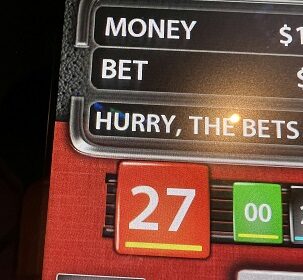



Roulette is one of the most recognizable casino games, known for its spinning wheel, numbered pockets, and distinctive betting table. Although the game appears simple, understanding its different bet categories, probability figures, and table layouts requires some basic knowledge. Every spin produces a random result, making roulette a useful example of how probability works in games of chance.
Understanding roulette bets, odds, and table layouts can help readers recognize the differences between European, American, and French roulette. Each version has its own wheel design, number arrangement, and mathematical characteristics. This guide explains the meaning of common roulette terms, how probabilities are calculated, and why the casino maintains a mathematical advantage over time.
What Is Roulette and How Does It Work?
Roulette is a casino game built around a rotating wheel containing numbered pockets and a small ball. The name comes from the French word meaning “little wheel,” reflecting the game’s distinctive design. Numbers on the wheel are associated with different colors, and the final resting position of the ball determines the result of each round.
The roulette table displays numbered spaces and several broader categories representing groups of numbers. These sections are commonly known as inside and outside betting areas, although their exact arrangement depends on the game version. Understanding the layout helps explain how probability differs between individual numbers and larger groups without changing the random nature of the outcome.
Roulette results are unpredictable because each properly functioning spin is an independent event. Previous outcomes do not determine which number will appear next, even when similar results occur repeatedly. This principle is important because many popular roulette beliefs incorrectly suggest that certain outcomes become more likely after a particular sequence of spins.
Understanding the Roulette Wheel and Number Colors
A traditional roulette wheel contains numbered pockets arranged around its circular surface. European roulette has 37 pockets, numbered from 0 to 36, while American roulette generally has 38 pockets because it includes both 0 and 00. This additional pocket changes the probability of different outcomes and contributes to differences in the game’s mathematical advantage.
The numbers from 1 through 36 are divided evenly between red and black, with 18 numbers assigned to each color. The zero pocket is green, and American roulette includes an additional green double-zero pocket. These colors provide a visual way to organize results, but they do not make one numbered pocket inherently more likely than another.
Numbers on the wheel follow a particular sequence rather than appearing in ordinary numerical order. The European and American wheels use different number arrangements, which can be identified by looking at their circular layouts. These patterns are part of the game’s traditional design and should not be mistaken for a method of predicting future results.
European Roulette Table Layout Explained
European roulette is distinguished by its single-zero wheel and a rectangular table layout displaying numbers from 1 to 36. The numbered section is arranged into three vertical columns and twelve horizontal rows. A separate green zero area appears beside the main number grid, creating a recognizable layout used across many European-style roulette tables.
The table also contains sections representing broader number categories, including red and black, odd and even, and different numerical ranges. These areas are visually separated from the central grid to distinguish groups of outcomes from individual numbers. The arrangement provides a clear illustration of how roulette categorizes possible results according to shared mathematical characteristics.
Because European roulette contains 37 equally likely pockets, the probability of any particular number appearing is approximately 2.70%. An individual red or black outcome has a probability of approximately 48.65%. The remaining probability belongs to the green zero, which explains why color-based outcomes are not equivalent to a perfectly balanced coin toss.
American Roulette Table Layout Explained
American roulette uses a wheel containing 38 pockets, including the numbers 1 through 36, a single zero, and a double zero. Both zero pockets are traditionally green, while the remaining numbers are evenly divided between red and black. This additional pocket is the most important structural difference between American and European roulette.
The American roulette table generally resembles the European layout, with three columns of numbered spaces and separate areas for broader categories. However, the presence of both 0 and 00 creates a different section at one end of the grid. This visual difference makes the American version relatively easy to recognize when comparing traditional table designs.
The additional zero changes the mathematical probability of every numbered result. In American roulette, an individual number has approximately a 2.63% chance of appearing, compared with 2.70% in European roulette. These differences may appear small, but they influence the underlying expected return and explain why the two versions have different mathematical characteristics.
French Roulette Table Layout and Special Rules
French roulette shares the single-zero wheel structure commonly associated with European roulette, but its traditional table presentation can look different. Many French layouts display betting categories with French terminology and feature an elongated arrangement around the numbered areas. The exact design varies by venue, although the fundamental numbered wheel remains recognizable.
Some French roulette tables include special rules known as La Partage and En Prison. These rules may apply to certain even-money categories when the ball lands on zero. Their purpose is to change how those outcomes are settled, creating mathematical differences from standard roulette rules where the zero normally produces a loss for these categories.
Under a traditional La Partage arrangement, the loss on an eligible even-money outcome is reduced by half when zero appears. This reduces the theoretical house edge on those particular categories to approximately 1.35%. Not every French roulette game uses the same rules, so the name alone does not guarantee that these special conditions are present.
Inside Roulette Bets: Categories and Meanings
Inside bets refer to traditional roulette categories connected to individual numbers or small groups within the main numbered grid. These categories include the straight-up, split, street, corner, and six-line. Each name describes a different number of possible outcomes, helping explain how the structure of the table connects with probability and published payout ratios.
A straight-up category represents one individual number, while a split represents two neighboring numbers on the table. A street covers a group of three numbers, and a corner represents four numbers arranged together. The six-line category refers to six numbers across two adjacent rows, creating a larger group than the other traditional inside categories.
The mathematical probability of these categories depends on how many numbered pockets they represent. For example, a four-number category corresponds to four of the 37 possible outcomes in European roulette, or approximately 10.81%. Larger groups cover more outcomes, but their published payout ratios are lower because the mathematical relationship between coverage and payout changes.
Outside Roulette Bets: Types and Probability
Outside bets refer to broader roulette categories displayed beyond the main numbered grid. These include red or black, odd or even, low or high, dozens, and columns. Unlike individual-number categories, outside categories represent larger sections of the numbered wheel, making them useful for understanding how different probability groups are organized.
Red and black each represent 18 numbered pockets, while odd and even divide the numbers from 1 through 36 into two equal groups. Low and high categories similarly represent 1 through 18 and 19 through 36. These groupings exclude the green zero pockets, which prevents their probabilities from reaching exactly 50%.
Dozens divide the regular numbered pockets into three groups of twelve, while columns also represent twelve numbers each. On a European wheel, a twelve-number group has approximately a 32.43% probability of appearing. On an American wheel, the corresponding probability is approximately 31.58%, reflecting the mathematical effect of having an additional pocket.
Roulette Odds and Payouts Explained
Roulette odds describe the mathematical relationship between possible outcomes and their likelihood of occurring. Probability expresses the chance of a result as a fraction or percentage, while payout ratios describe the amount associated with a successful category. Understanding this distinction is important because payout figures do not directly represent the true probability of winning.
Traditional roulette payout ratios differ according to the number of outcomes represented. A straight-up category typically has a published payout of 35 to 1, while two-number and three-number categories commonly have ratios of 17 to 1 and 11 to 1. Four-number and six-number categories traditionally have ratios of 8 to 1 and 5 to 1.
Broader categories have lower payout ratios because they represent more possible outcomes on the wheel. Dozens and columns traditionally have 2-to-1 payouts, while even-money categories use a 1-to-1 ratio. These figures describe standard roulette rules, but they do not remove the mathematical advantage held by the casino across repeated independent outcomes.
Understanding the House Edge in Roulette
The house edge represents the casino’s theoretical average advantage over a very large number of rounds. It exists because the published payouts are slightly lower than the amounts that would correspond to perfectly fair mathematical odds. The house edge does not predict the result of any individual spin or guarantee a particular short-term outcome.
In standard European roulette, the house edge is approximately 2.70% because the wheel contains 37 pockets. Standard American roulette has a higher house edge of approximately 5.26% because it contains 38 pockets. These percentages represent long-run mathematical expectations rather than a fixed amount lost during every round of play.
An important concept is that individual outcomes remain unpredictable even when the house edge is known. Short sequences may differ considerably from long-run statistical expectations because random variation can produce unusual patterns. Over many repeated rounds, however, the mathematical advantage remains built into the game’s rules, and no betting pattern can guarantee favorable results.
Online Roulette vs. Traditional Roulette Tables
Online roulette presents the familiar numbered wheel and table categories through a digital interface rather than a physical casino table. Some online versions use computer-generated outcomes, while live-dealer formats display a physical wheel through a video stream. Both approaches are designed to reproduce recognizable roulette structures, although their technical operations are different.
Computer-generated roulette relies on random number generation systems to determine results. Properly regulated systems are expected to meet applicable standards for randomness and fairness, with independent testing used in some jurisdictions. However, digital presentation alone does not establish whether a particular service is licensed, properly tested, or operating under effective consumer protection requirements.
Live-dealer roulette uses a physical wheel operated in a studio or casino environment, with the results transmitted to a digital interface. Its table appearance may resemble European, American, or French roulette. Regardless of the presentation method, the underlying probabilities depend on the wheel structure and rules, not on whether the experience is physical or digital.
Common Roulette Myths and Important Facts
One common roulette myth is that a number becomes more likely after failing to appear for several rounds. This misunderstanding is known as the gambler’s fallacy, which occurs when someone expects independent random events to balance themselves immediately. In reality, previous roulette results do not change the probability of the next properly functioning independent spin.
Another misconception is that repeating patterns can reliably reveal the next number or color. People naturally search for patterns in random information, especially when several similar outcomes appear close together. However, streaks are normal features of random sequences, and observing them does not create a dependable method of predicting future results.
Roulette is also sometimes presented as a game where specific betting systems can overcome the casino’s mathematical advantage. Changing the amounts associated with different outcomes cannot alter the wheel’s probabilities or eliminate its established house edge. Understanding these facts is more useful than relying on exaggerated claims about guaranteed results, predictable sequences, or supposedly risk-free systems.
Conclusion
Roulette is a traditional game of chance with recognizable wheels, numbered layouts, and several categories representing different possible outcomes. European, American, and French roulette share many basic features but differ in their wheel structures and certain rules. Understanding these distinctions helps explain why probabilities and theoretical house advantages are not identical across every version.
Roulette odds and payouts are based on mathematical relationships between the number of possible outcomes and the categories represented on the table. Individual-number categories have lower probabilities and higher published payouts, while broader categories have more possible outcomes and lower payouts. However, every standard version includes a mathematical casino advantage that remains relevant over repeated rounds.
The most important fact about roulette is that each properly functioning spin is random and independent. Previous results, recurring patterns, and popular betting systems cannot reliably predict future outcomes or guarantee financial success. Learning the mathematics behind roulette provides a clearer understanding of probability, uncertainty, and why games of chance should never be treated as a dependable source of income.
Frequently Asked Questions (FAQs)
What are the main types of roulette?
The main types are European, American, and French roulette. European and French versions generally use one zero, while American roulette includes both zero and double zero, creating different probabilities and house edges.
What is the difference between inside and outside bets?
Inside categories represent individual numbers or smaller groups within the numbered grid. Outside categories represent broader groups, such as colors, number ranges, dozens, and columns, with different probabilities and payout ratios.
What is the house edge in roulette?
Standard European roulette has a house edge of approximately 2.70%, while American roulette has an edge of approximately 5.26%. These figures describe long-term mathematical expectations rather than guaranteed results for individual rounds.
Can roulette results be predicted using previous spins?
No, previous results do not reliably predict future outcomes on a properly functioning roulette wheel. Every spin is independent, and patterns or streaks do not change the mathematical probability of individual results.
Why does American roulette have different odds?
American roulette contains 38 pockets instead of the 37 found in European roulette. The additional double-zero pocket reduces the probability of individual numbered outcomes and increases the standard house edge.