


Introduction
A wasp problem can start quietly. You might notice a few insects around the garden, then begin seeing them near a window, roof edge or doorway every day. Eventually, the activity becomes difficult to ignore. In many cases, the real issue is not the individual wasps but a nest established somewhere close to the property.
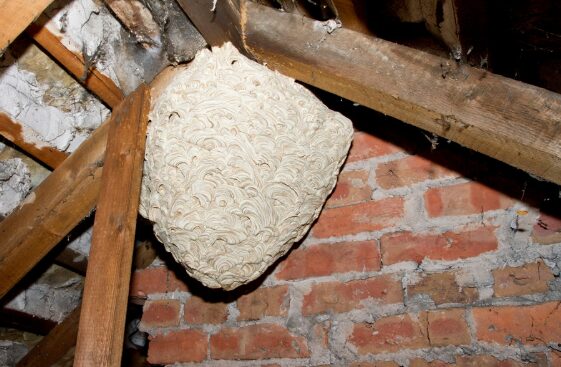
Wasp nests are not always easy to see. Some are built in lofts, roof spaces, sheds, wall cavities or other sheltered areas. When wasps repeatedly travel through the same gap, it may indicate that a colony is using a concealed space.
Understanding the signs can help homeowners and businesses decide when professional pest control is appropriate.
1. How to Tell If Wasps Are Nesting Nearby
Occasional wasps in a garden do not necessarily mean there is a nest on your property. However, repeated activity in one specific area is more significant.
Look for patterns rather than isolated sightings. You may notice wasps repeatedly flying towards the same roofline, disappearing behind a fascia, entering a small opening or travelling into an outbuilding.
Other signs can include:
- Increasing numbers of wasps around one location
- Regular activity around a roof or wall opening
- Wasps appearing indoors without an obvious reason
- Increased insect activity around a loft or garage
- A visible paper-like nest
- Wasps repeatedly gathering near a shed or garden structure
The location of the activity can provide useful clues, but it does not always reveal exactly where the nest is positioned.
2. Where Wasps Commonly Establish Nests
Wasp Exterminator generally look for protected locations where their colony can develop with limited disturbance.
Around residential and commercial properties, nests may be found in:
Loft Spaces
Roof areas can provide shelter and are often overlooked because they are not regularly occupied.
Wall Cavities
A nest inside a cavity may be completely hidden from view. The only obvious sign could be wasps entering through a small external opening.
Sheds and Garages
Outbuildings can provide quiet, sheltered areas where insects can establish nests.
Roof Edges and Eaves
The protected sections around roofs can sometimes become nesting locations, particularly where access is available.
Gardens and Outdoor Structures
Trees, hedges and other sheltered areas may also support nesting activity.
Because nests can be concealed, investigating the movement of the insects can be more useful than simply searching for a visible structure.
3. Why You Should Not Disturb an Active Nest
An active wasp nest should be treated with caution. Wasps can respond defensively when their colony is threatened, and attempting to reach or remove a nest can expose a person to multiple stings.
This is especially important when the nest is:
- Above head height
- Inside a wall or roof
- Close to a doorway
- Near children’s play areas
- Beside outdoor seating
- Inside a regularly used building
DIY treatment can also fail to address the actual source if the colony is hidden.
If you are unsure where the nest is located or cannot safely access it, professional assistance is generally the safer option.
4. What Professional Wasp Nest Removal Involves
Professional treatment should begin with an assessment rather than an assumption.
A technician can examine the wasp activity and determine where insects appear to be travelling. The position of the nest, accessibility and surrounding environment can all influence how the problem should be approached.
The objective is to address the established source rather than simply reacting to individual insects.
A professional may also consider whether people, pets or non-target species could be affected by treatment. Responsible pest control involves using suitable methods and applying them carefully.
5. Why Fast Action Can Be Helpful
A nest located far away from people may not create the same immediate concern as one beside a busy entrance.
However, if wasps are regularly entering a home or workplace, delaying an assessment can allow the nuisance to continue and may make certain areas of the property difficult to use.
For businesses, this can be particularly disruptive. Outdoor dining spaces, entrances and customer areas can become uncomfortable when wasps are constantly present.
A prompt professional assessment can help establish whether there is an active nest and what action is appropriate.
6. Choosing a Professional Wasp Exterminator
Selecting a pest control provider requires more than searching for the fastest advertised appointment.
Look for evidence of professional experience and responsible working practices. Insurance, relevant qualifications, industry membership and transparent pricing are all useful factors.
The supplied information for The Exterminator Pest Control describes a family-run service based in Chelmsford and operated by Rob and Alison Smith. It states that the business is fully insured and a British Pest Control Association member.
The information also identifies Rob as holding an RSPH Level 2 qualification in pest management and describes experience in pest control and wastewater-related CCTV drainage surveys.
These details illustrate what customers can look for when comparing pest control companies: identifiable expertise, professional credentials and a clear approach to customer care.
7. Preparing for a Pest Control Visit
You do not need to dismantle parts of your property or attempt to reach the nest before the technician arrives.
Instead, keep away from the suspected nesting area where possible. Keep children and pets away and avoid hitting, spraying or blocking an active nest entrance.
If you can do so safely, note where the wasps are travelling. Information about when activity occurs and where insects appear to enter the property can help the technician during the initial assessment.
The provider can then determine what needs to be done.
8. Preventing Future Wasp Problems
After treatment, prevention can help reduce the likelihood of future pest issues.
Depending on the property, useful measures may include checking gaps around roof structures, maintaining outbuildings, inspecting potential access points and keeping areas around bins and food waste appropriately managed.
Prevention does not guarantee that wasps will never return, because insects can establish nests in many different locations. Nevertheless, maintaining the property and responding early to unusual activity can make future problems easier to identify.
Conclusion
Finding wasps repeatedly around your property does not always mean there is an obvious nest waiting to be removed. The colony may be concealed behind a wall, under a roof structure, inside an outbuilding or somewhere else that is difficult to inspect safely.
Understanding the warning signs is therefore important. If wasps are repeatedly using one area, particularly near people or a busy part of a property, professional Wasp nest removal can provide a safer way to investigate and address the problem.
A qualified Wasp Exterminator can assess the activity, identify the likely source and recommend an appropriate treatment based on the circumstances. For homeowners and businesses, professional advice can remove the guesswork and reduce the temptation to disturb an active colony themselves.